
When exploring medical weight loss options, it is completely natural to have questions about safety. Deciding to take control of your health is an empowering step, but it often comes with a bit of anxiety about the unknown.
You might find yourself wondering: What does it actually feel like after the procedure? What are the common gastric balloon side effects, and how manageable are they?
Because a gastric balloon is entirely non-surgical, it avoids the major structural risks associated with invasive bariatric operations like stapling or cutting the stomach.
However, introducing a temporary medical device into your digestive system means your body will naturally undergo a brief adjustment period.
To help you feel confident and fully prepared, let’s take an honest, clinically backed look at what to expect post-procedure and how the specialized team at ACC Evesuite prioritises your comfort.
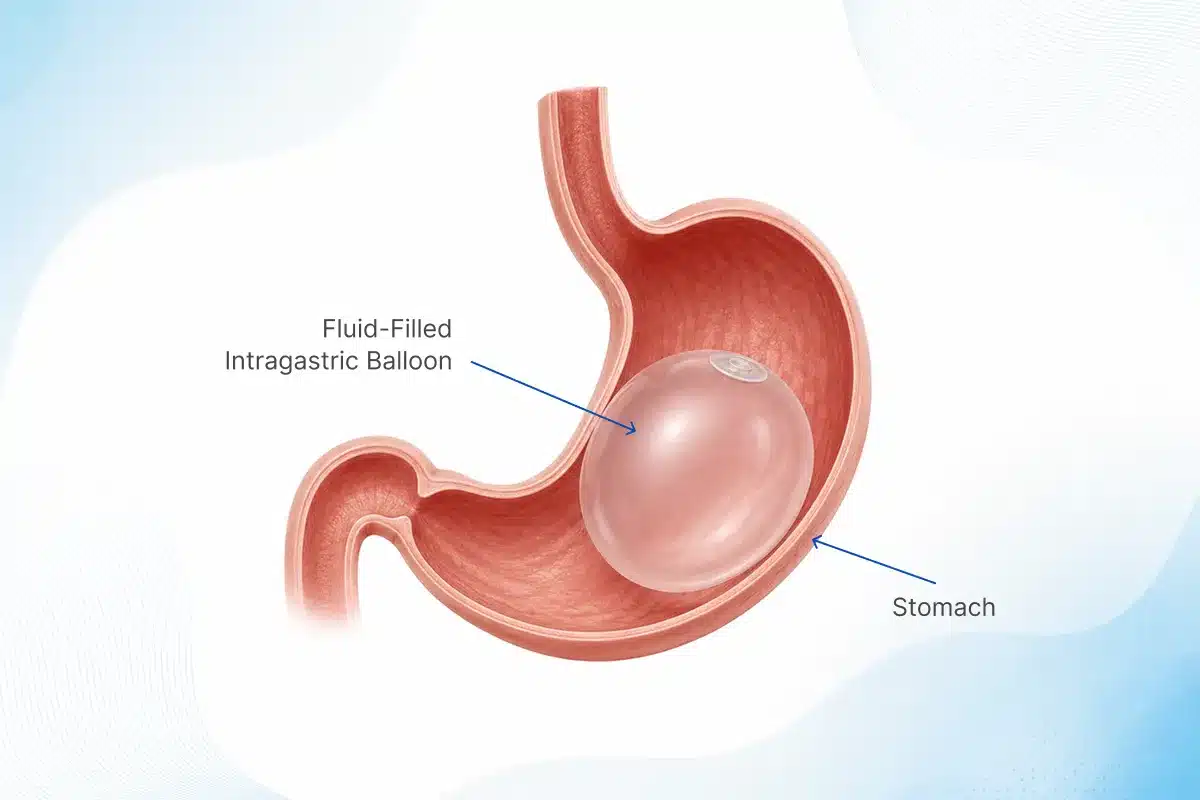
Is the Gastric Balloon Safe?
Yes, the gastric balloon is widely recognized as a safe, minimally invasive, and highly effective weight management tool. Large-scale clinical data strongly supports this safety profile; a landmark global review tracking over 1,100 patients confirmed that modern intragastric balloons demonstrate exceptional safety and tolerability outcomes.
At ACC Evesuite, we elevate these global safety standards by ensuring your procedure is completely specialist-led:
- NSR-Certified Specialists: Your procedure and consultations are entirely managed by experienced, National Specialist Register (NSR) certified weight loss specialists.
- Accredited Endoscopy Suite: We perform the procedure using state-of-the-art equipment and strict safety protocols in a fully accredited facility.
- Proven Patient Satisfaction: Our compassionate approach has earned a 4.6 out of 5.0 rating based on more than 100 patient reviews, reflecting our dedication to patient comfort and excellent clinical outcomes.
While temporary side effects do occur as your body adjusts, they are highly predictable and actively managed by our clinical team.
3 Common Gastric Balloon Side Effects
The term gastric balloon side effects most frequently refers to the temporary physical symptoms a patient experiences during the first 3 to 7 days after the device is placed. In clinical medicine, this brief window is formally called the accommodation phase.
To understand why this phase happens, it helps to look at the biology of your digestive system. Your stomach is a highly muscular organ designed to break down everything that enters it.
When the balloon is first filled, your stomach does not recognize it as a high-tech weight-loss aid; it treats it as a large, solid mass of food.
As a result, the stomach wall naturally contracts repeatedly, working overtime to digest and pass the balloon.
This intense muscular response is the root cause of the main physical pain points post-procedure.
To help you prepare mentally and physically, here is a deep, transparent breakdown of the three primary symptoms, the exact clinical reasons behind them, and what they actually feel like:
1. Nausea and Vomiting (The Peak Physiological Response)
- The Patient Experience: You will likely experience waves of moderate-to-intense nausea, similar to severe motion sickness, starting a few hours after your comfort sedation wears off. Fluid regurgitation or dry heaving can occur frequently during the first 48 to 72 hours, especially if you try to swallow liquids too quickly.
- The Clinical Reason: Clinical data tracking early post-placement symptoms shows that the physical volume of the balloon stretches the gastric mucosa. This rapid stretching triggers the vagus nerve to send immediate, continuous “rejection” signals to the brain’s emetic (vomiting) center.
- The Reality: While this is visually and physically the most challenging hurdle for patients, it is a completely normal, expected milestone indicating that your nervous system and stomach are actively adapting to the device
2. Abdominal Cramping and a Sensation of Deep Heaviness
- The Patient Experience: Patients often describe this pain point as a strong, localized muscular squeezing sensation right below the ribs, accompanied by a profound feeling of being completely “stuffed,” as if you have just eaten an incredibly massive meal.
- The Clinical Reason: High-authority meta-analyses on device mechanisms explain that mechanical distension of the gastric lumen physically forces a delay in gastric emptying. Because the stomach cannot empty normally, its smooth muscles spasm intensely against the balloon. This prolonged contraction causes cramping, much like how overworking a bicep causes muscle soreness.
- The Reality: The cramping typically peaks by Day 3 and subsides dramatically once the smooth muscles of the stomach naturally relax and accept the balloon’s baseline volume.
3. Acid Reflux, Heartburn, and Hyperacidity
- The Patient Experience: A burning sensation in your chest or throat, frequent burping (which may have a distinct odor initially), and an unpleasant sour taste in your mouth. You may also notice your upper abdomen feels physically tight or bloated.
- The Clinical Reason: Because the balloon occupies a significant portion of your regular stomach cavity, it drastically reduces the physical space available for natural gastric juices. When your stomach contracts, it exerts higher hydrostatic pressure on these fluids, pushing stomach acid upward past the lower oesophageal sphincter and into the food pipe.
- The Reality: While hyperacidity can linger slightly longer than the initial nausea, it is highly manageable and completely responsive to targeted, acid-suppressing medical therapies.
These post-procedure sensations are similar to what many patients report after any endoscopic procedure — see our guide on [what to expect during and after an endoscopy] for a fuller picture.
What to Expect Post-Procedure: Timeline to Recovery
Understanding your recovery timeline can significantly lower post-procedure anxiety. Here is how your body typically adapts week by week:
- Days 1 to 3 (The Peak Phase): This is when early symptoms like nausea and cramping are most pronounced. Patients are advised to rest at home and strictly consume small, frequent sips of clear liquids.
- Days 4 to 7 (The Turning Point): The stomach rapidly begins to settle. Nausea fades significantly, and you will gradually transition from clear liquids to thicker liquids, such as pureed soups or protein shakes.
- Week 2 and Beyond (Full Adaptation): By this point, the vast majority of early side effects have completely resolved. Your stomach has accepted the balloon, and you will begin transitioning back to solid, nutrient-dense foods in much smaller, naturally controlled portion sizes.
For a broader look at how your body heals after any medical procedure, see our guide to [the stages of wound healing].

How ACC Evesuite Minimises Your Side Effects
You are never left to handle the adjustment phase alone. ACC Evesuite offers a fully supported programme with premium features specifically designed to minimise your discomfort:
Premium Adjustable Balloon Technology
Unlike fixed-volume balloons, we utilize advanced, premium adjustable device technology. This means if your early accommodation side effects or nausea are more intense than expected, our NSR-certified specialist can comfortably adjust the balloon’s volume endoscopically to match your individual tolerance levels.
A Completely Managed Care Package
Our day-care package is built around your physical peace of mind. Your insertion process is performed under Comfort Sedation to ensure you feel absolutely no pain.
Following the swift procedure, you will rest in a Daycare Bed—a comfortable recovery space where you will receive dedicated Nursing Care and professional support before heading home safely the very same day
All facility fees are covered transparently under our admission charges.
Read: How Much Weight Can You Lose with a Gastric Balloon? Benefits & Realistic Results
Beyond the Balloon: Your ACC Shape Journey
Minimising early side effects is just the first step. To guarantee long-term, sustainable weight loss without hitting plateaus, your gastric balloon is integrated into the comprehensive ACC Shape Journey—a complete, medically guided weight management programme that supports you at every stage:
- Comprehensive Health Screening: Before placement, we conduct a thorough, specialist-led medical assessment to identify any underlying health factors affecting your weight.
- Lifestyle Coaching: Our team provides personalised lifestyle and nutrition support to help you build healthy habits that go far beyond the scale.
- Appetite Management Solutions: If needed, our specialists can supervise medically prescribed specialized anti-nausea medications (antiemetics), muscle relaxants to ease stomach cramping, and proton pump inhibitors (PPIs) to further support your appetite control and ease your dietary transition safely.
- Fat Dissolve Treatment (Mesolipolysis): To complement your overall weight reduction, we offer minimally invasive Mesolipolysis to target stubborn fat areas safely and effectively.

Take the Next Step with Confidence
Experiencing mild discomfort for a few days is a small, temporary milestone on your path to a healthier life.
With premium adjustable technology, a state-of-the-art facility, and a fully supported care team, your safety and comfort are guaranteed.
Contact ACC Evesuite today to schedule your personalized consultation and take your first step towards a healthier, more confident lifestyle.
Disclaimer: The information provided in this article is for educational purposes only and should not replace professional medical advice. Always consult with a qualified healthcare provider regarding any medical conditions or weight loss treatments.
References
Wiggins, T., Sharma, O., Sarfaraz, Y., Fry, H., Baker, J. and Singhal, R. (2023). Safety and Efficacy of 12-Month Intra-gastric Balloon—Series of over 1100 Patients. Obesity Surgery. doi:https://doi.org/10.1007/s11695-023-06953-0.
Edathodu, Z., Khan, S.A. and Peedikayil, M.C. (2025). Comparative Efficacy and Long-Term Outcomes of Intragastric Balloons for Obesity: A Systematic Review and Meta-Analysis. Cureus. doi:https://doi.org/10.7759/cureus.88002.
Marek Bužga, Machytka Evžen, Pavel, K., Kupka Tomáš, Zavadilová Vladislava, Pavel, Z. and Zdeněk Švagera (2014). Effects of the Intragastric Balloon MedSil® on Weight Loss, Fat Tissue, Lipid Metabolism, and Hormones Involved in Energy Balance. Obesity Surgery, 24(6), pp.909–915. doi:https://doi.org/10.1007/s11695-014-1191-4.
Crossan, K. and Sheer, A.J. (2022). Intragastric Balloon. [online] PubMed. Available at: https://www.ncbi.nlm.nih.gov/books/NBK578184/.
Ameen, S. and Merchant, H.A. (2024). Intragastric balloons for obesity: critical review of device design, efficacy, tolerability, and unmet clinical needs. Expert Review of Medical Devices, [online] 21(1-2), pp.37–54. doi:https://doi.org/10.1080/17434440.2023.2289691.
Medically reviewed by
Dr Ruthresh Rao Subramanyan
MBBS (UniSZA), MPH (Distinction) (University of Malaya)
Dr Ruthresh Rao Subramanyan currently serves as Senior Manager (Medical Services) at Qualitas Medical Group, where he leads clinical governance, clinical development, continuing medical education and regulatory affairs across the organisation’s network of more than 100 doctors. He has a background in public health, occupational health and healthcare leadership, with previous roles at the National Cancer Society Malaysia and Malaysia’s Crisis Preparedness and Response Centre (CPRC). He holds an MBBS from UniSZA, a Master of Public Health (Distinction) from the University of Malaya, and postgraduate studies in Medical Law & Practice.
Our medical reviewers are part of Qualitas Health Group, of which ACC is a member through Qualitas Health Malaysia.